
Palmetto Bug FAQ
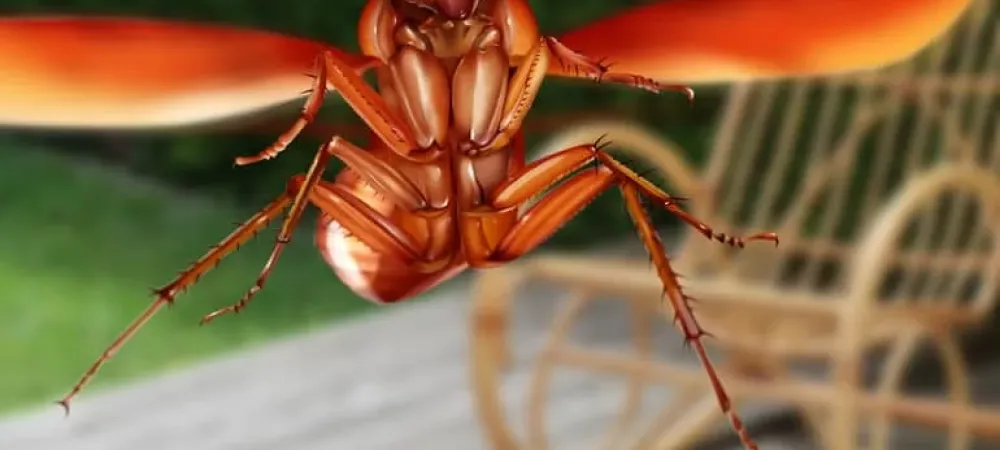
What is a palmetto bug?
A palmetto bug is not a distinct species. It's a regional nickname, common across Alabama, Florida, Louisiana, and Mississippi, for a handful of large cockroaches that show up in and around homes. Depending on where you live, the term usually points to the American cockroach, the Florida woods cockroach, or the smokybrown cockroach. All three are true cockroaches, just marketed under a friendlier name.
How do I tell which cockroach species I actually have?
Check color, size, and where you found it. The three cockroaches most often called palmetto bugs look and behave differently:
| Species | Appearance | Where it's found |
|---|---|---|
| American cockroach | Reddish-brown, 1.5+ inches, yellowish figure-eight marking behind the head | Sewers, drains, damp basements; strong flier |
| Florida woods cockroach | Dark brown to black, up to 1.5 inches, emits a defensive odor | Mulch, leaf litter, woodpiles, tree holes; rarely flies |
| Smokybrown cockroach | Uniform shiny dark brown to mahogany, no markings | Attics, eaves, gutters, tree canopies; strong flier, drawn to light |
If you're not sure which one you're looking at, that's normal. Misidentification is common even among homeowners who've dealt with roaches before, which is why a technician's on-site ID matters before any treatment plan is set.
Do palmetto bugs bite?
No, palmetto bugs don't bite people. Their mouthparts aren't built for it, and they have no reason to target humans. The health risk isn't a bite, it's contamination. Because these roaches travel through sewers, drains, and decaying organic matter, they can carry bacteria like salmonella and E. coli into your home on their legs and bodies, contaminating counters, dishes, and food.
Are palmetto bugs actually dangerous?
Yes, but the danger is bacterial and respiratory, not physical. Palmetto bugs pick up pathogens in the unsanitary places they travel through and can transfer them to food-prep surfaces. Their shed skins, droppings, and decomposing bodies also break down into airborne particles that can trigger asthma and allergy symptoms, especially in children. Neither risk requires direct contact with the insect itself.
Do palmetto bugs fly?
It depends on the species. American cockroaches and smokybrown cockroaches both have fully developed wings and can fly, usually gliding short distances toward light rather than sustaining long flights. Florida woods cockroaches, by contrast, rarely fly even though they have wings. If something large is dive-bombing your porch light at night, it's most likely an American or smokybrown cockroach.
What do palmetto bugs eat?
Palmetto bugs are omnivorous scavengers that will eat almost any organic material. That includes food scraps, grease, pet food, paper, cardboard, glue, and even decaying plant matter. When food is scarce, some species resort to cannibalizing dead roaches. This isn't picky-eater behavior, it's why leaving any food source accessible, indoors or out, gives them a reason to stick around.
How fast do palmetto bugs reproduce?
Slower than German cockroaches, but still fast enough to become a real problem. A female produces an egg case (ootheca) containing 14 to 16 eggs, and she may produce dozens of these cases over her lifetime. Depending on the species, it can take close to two years for an egg to reach adulthood, and adults then live a year or more. Because that cycle is slower than smaller roach species, an infestation tends to build gradually rather than explode overnight, which is exactly why early signs (droppings, egg cases, a musty odor) are worth acting on before numbers climb.
Can palmetto bugs survive without food or water?
Yes, for a surprisingly long time. Multiple pest control and entomology sources cite a range of roughly three months without food and about a month without water for the larger roach species grouped under "palmetto bug." That resilience is part of what makes them hard to starve out with cleaning alone. Cutting off standing water (leaky pipes, condensation, pet bowls left out overnight) does more to discourage them than food removal by itself.
What time of year are palmetto bugs most active?
Late summer and fall, when they're both breeding and searching for shelter from dropping temperatures. Activity picks up again in spring as bugs that overwintered indoors emerge to feed. Once inside a climate-controlled home, though, a palmetto bug population can stay active year-round regardless of season, which is why "it's not the season for that" isn't a reliable reason to wait on treatment.
Why do I have palmetto bugs in my house?
Because your home offers food, water, warmth, or shelter that's harder to find outside. Common draws include:
- Excess moisture — leaky pipes, condensation, or damp bathrooms
- Accessible food — pet food left out, open trash, food debris
- Clutter — stacked cardboard, paper, or storage piles near entry points
- Landscaping contact — mulch, woodpiles, or shrubs touching the foundation
Seeing even one palmetto bug indoors usually means there's a larger population nearby, since these roaches rarely travel alone. Because they're easy to confuse with other species, and because treatment approaches differ by species, we recommend a professional inspection before attempting any DIY roach control.
How do I prevent palmetto bugs from coming back?
Focus on moisture and entry points first, since those matter more than food removal for these species. Practical steps include:
- Fix leaky pipes and eliminate standing water, indoors and out
- Seal cracks in the foundation, gaps around utility lines, and torn window screens
- Keep mulch, shrubs, and woodpiles at least a foot away from the foundation
- Store trash in sealed containers and avoid leaving pet food out overnight
- Trim tree limbs that touch the roofline, a common smokybrown cockroach entry route
These steps reduce the odds of a new infestation, but they won't eliminate an existing one on their own, especially with American or Florida woods cockroaches that also live in sewer lines and yard debris.
When should I call a pest control professional?
Call as soon as you spot droppings, egg cases, a musty odor, or more than one live roach, rather than waiting to see if it gets worse. Palmetto bugs are difficult to fully eliminate with store-bought sprays because they nest in hard-to-reach spots like wall voids, sewer lines, and yard debris that DIY treatments don't reach. A licensed technician can identify the exact species you're dealing with and treat both the interior harborage points and the exterior sources feeding the problem.
Seeing palmetto bugs in or around your home?
Beebe's Pest & Termite Control has served the Gulf Coast since 1979, with over 125 years of combined team experience across Alabama, Florida, Louisiana, and Mississippi.