
8 Signs of a Termite Infestation
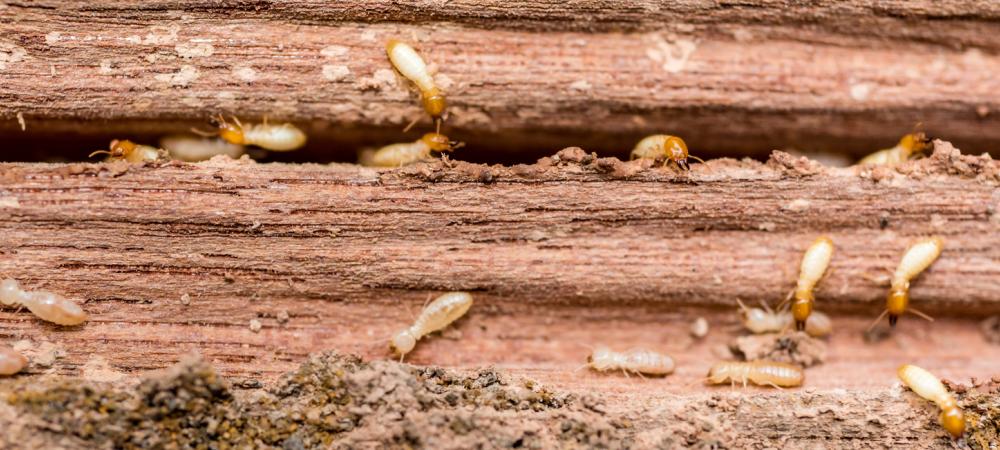
The 8 most reliable signs of a termite infestation are hollow-sounding or damaged wood, mud tubes on foundations or walls, discarded termite wings, live swarmers, frass (termite droppings that look like sawdust), peeling or bubbling paint, tight-fitting doors and windows, and faint clicking or rustling sounds inside walls. Mud tubes and discarded wings are the two signs pest professionals consider most definitive, because they're hard to mistake for anything else. If you notice any of these, the next step is a professional inspection — termite damage isn't a DIY problem, and by the time damage is visible, a colony has usually been established for years.
Why termite signs are easy to miss
Termites feed from the inside of wood outward, leaving a thin, intact surface layer while hollowing out the structure underneath. According to the National Pest Management Association (NPMA), termites cause an estimated $6.8 billion in property damage annually in the United States once adjusted for inflation, and standard homeowners insurance almost never covers it. A 2026 NPMA survey found only 36% of homeowners could correctly identify common termite warning signs. That gap between "the damage is happening" and "the homeowner notices" is exactly why each sign below is worth knowing on its own.
8 signs of a termite infestation
Mud tubes on your foundation or walls
Mud tubes are the single most reliable visible sign of subterranean termites. These are pencil-width tunnels made of soil, wood particles, and termite saliva that run along a foundation, crawl space wall, or slab edge. Subterranean termites build them to travel between their underground colony and a food source while staying protected from open air and predators, since they need consistent moisture to survive outside the soil.
What to do: If you find a mud tube, don't break it open to check if it's active. Leave it intact and call a licensed technician — breaking the tube just prompts the colony to rebuild elsewhere.
Discarded wings near windows and doors
Small piles of shed, uniform-length wings near windowsills, door frames, or light fixtures mean a termite colony has already established itself inside or very close to your home. Reproductive termites ("swarmers") grow wings to fly from their parent colony and start a new one, then shed their wings once they land and pair off.
How to tell it's termites and not flying ants: Termite swarmers have two pairs of wings that are equal in length, straight antennae, and a thick waist. Flying ants have unequal wing lengths, elbowed antennae, and a pinched waist.
Live swarmers
Seeing winged termites, especially indoors, signals an active colony nearby that's mature enough to reproduce. Swarming typically happens in spring across most of the U.S., though in warmer Gulf Coast climates it can occur earlier in late winter, and swarms are most common during daytime hours following warm, rainy weather.
Why this sign matters more than it seems: A termite colony generally needs 5 to 10 years to grow large enough to produce reproductive swarmers. If you're seeing swarmers, the colony behind them isn't new — it's established.
Frass (termite droppings)
Small, pellet-like mounds that resemble sawdust or coffee grounds near baseboards, window sills, or wood furniture are frass — termite excrement. This sign specifically points to drywood termites, which live inside the wood they eat and push frass out of small "kick-out holes" to keep their tunnels clear.
What makes this sign self-contained: Frass is one of the few signs you can find without any tools or special knowledge. Finding it in one spot doesn't mean the whole house is affected, but that specific piece of wood needs a professional look.
Wood that sounds hollow when tapped
If tapping on a wall, beam, or trim produces a hollow or papery sound instead of a solid thud, termites may have eaten the wood from the inside. Because termites leave the outer surface mostly intact, wood can look completely normal while structurally it's a shell.
Important distinction: A hollow sound alone doesn't confirm termites — it confirms that wood needs to be inspected further. Carpenter ants and moisture rot can produce a similar sound.
Peeling, bubbling, or uneven paint
Paint that bubbles, peels, or looks water-damaged on walls closest to the ground can be a termite sign, not just a moisture problem. Termites thrive in humid conditions and generate moisture as they tunnel through wall cavities, which can telegraph through to the paint surface.
How to narrow it down: Check for other signs in the same area — small pinholes in the wallpaper, faint pencil-thin tunnel lines, or a hollow sound when you tap nearby.
Tight-fitting doors and windows
Doors or windows that suddenly stick, warp, or become difficult to open can indicate structural movement caused by termite damage to surrounding wood framing. As termites hollow out studs and framing near openings, the frame can shift slightly.
Why homeowners miss this: It's easy to blame humidity or an old house settling. If sticking doors or windows show up alongside any other sign on this list, that's the point to stop assuming and start inspecting.
Noises inside the walls
Soft clicking, rustling, or rattling sounds from inside a wall, especially at night when the house is quiet, can indicate an active termite colony. Worker termites make a papery rustling sound while tunneling, and soldier termites make a distinct rattling sound against tunnel walls to warn the colony of danger.
Practical note: This is the hardest sign to use on its own, since it requires a fairly severe infestation to be audible. Treat it as confirmation alongside a visible sign, not a standalone red flag.
Termite damage vs. water damage: how to tell the difference
Both can look nearly identical — hollow-sounding wood, peeling paint, warped surfaces. Here's the clearest way to differentiate:
| Signal | Points to termites | Points to water damage |
|---|---|---|
| Mud tubes present | Yes | No |
| Discarded wings nearby | Yes | No |
| Damage location | Foundation, sill plates, wood-to-soil contact points | Near plumbing, roof leaks, windows |
| Wood texture when opened | Layered, tunnel-like galleries, sometimes packed with mud | Soft, spongy, discolored throughout |
| Frass present | Yes (drywood termites) | No |
What to do if you notice any of these signs
Don't disturb the area. Breaking mud tubes or spraying an over-the-counter pesticide on visible activity can scatter the colony and make inspection and treatment harder, not easier.
Document what you see. A photo of the mud tube, wing pile, or damaged wood helps a technician assess severity before they even arrive.
Schedule a professional inspection. Termite identification and treatment require licensed expertise — the difference between subterranean, drywood, and Formosan termites changes the entire treatment approach.
Ask about prevention options if no active infestation is found. Bait station systems can be installed as a proactive measure even without a confirmed colony.
Frequently asked questions
Do termites make noise you can actually hear?
Yes. In a severe infestation, worker termites produce a soft rustling sound while tunneling, and soldier termites produce a rattling or clicking sound by banging their heads against tunnel walls to warn the colony of danger. The sound is usually only audible in a quiet room and typically indicates the infestation is already well established.
What is the very first sign of termites most homeowners notice?
Discarded wings near windowsills or doors and mud tubes along the foundation are typically the first signs homeowners notice, since both are visible without any special tools. However, survey data shows only about a third of homeowners can correctly identify these signs, which is why damage often goes unnoticed for years before discovery.
Are mud tubes always a confirmed sign of termites?
Mud tubes are one of the most reliable termite indicators pest professionals rely on, since subterranean termites build them specifically to travel safely between soil and a wood food source. An empty or abandoned-looking tube doesn't rule out termites either — it should still be inspected, since termites can reroute their tunnels.
Can you have a termite infestation and not know it for years?
Yes. Termite colonies generally take 5 to 10 years to mature enough to produce visible swarmers, and termites feed from inside wood outward, so a home can have an active, damaging infestation with no visible surface signs for a long time.
Does homeowners insurance cover termite damage?
Typically, no. Standard homeowners insurance policies classify termite damage as a preventable maintenance issue rather than a sudden or accidental loss, which means repair costs generally fall entirely on the homeowner.
How is termite damage different from carpenter ant damage?
Both pests can produce hollow-sounding wood, but termites leave behind mud and soil debris in their tunnels (for subterranean species) or small pellet-like frass (for drywood species), while carpenter ants leave smooth, clean tunnels with no mud or frass, since they excavate wood rather than eat it.
Schedule a free termite inspection
Beebe's Pest & Termite Control has served the Gulf Coast since 1979 with licensed technicians and over 125 years of combined team experience.
Schedule a free inspection